


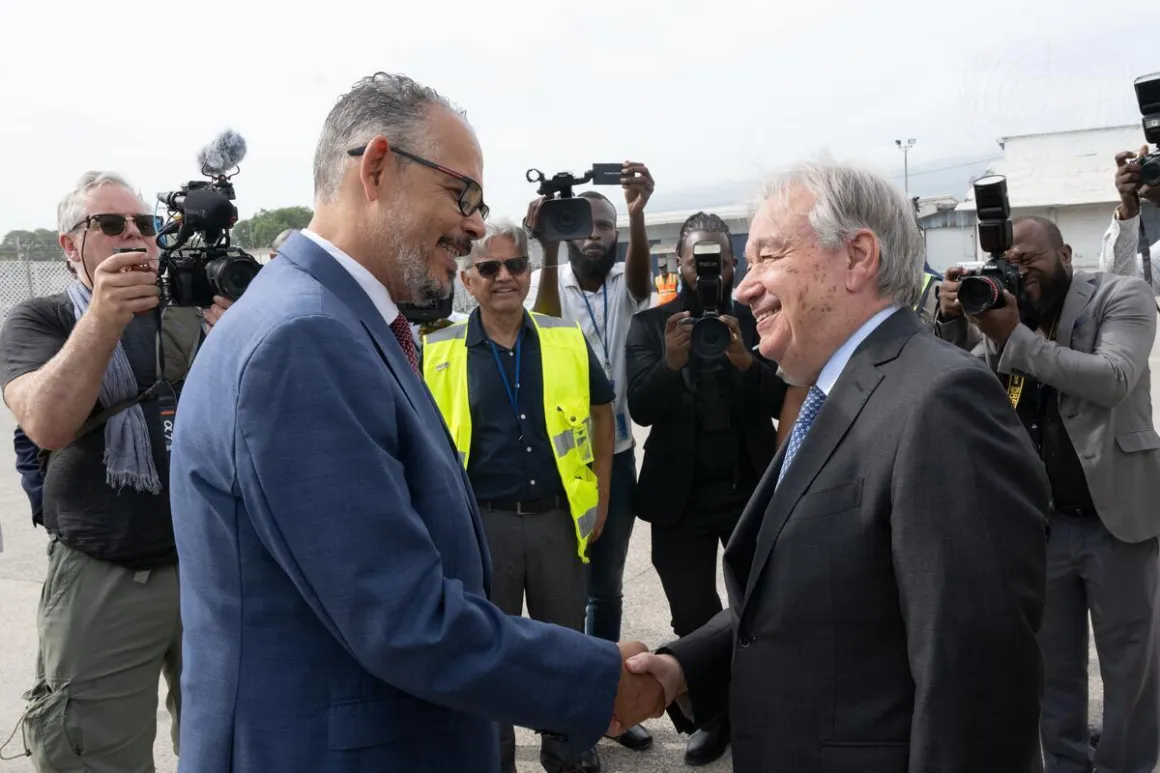
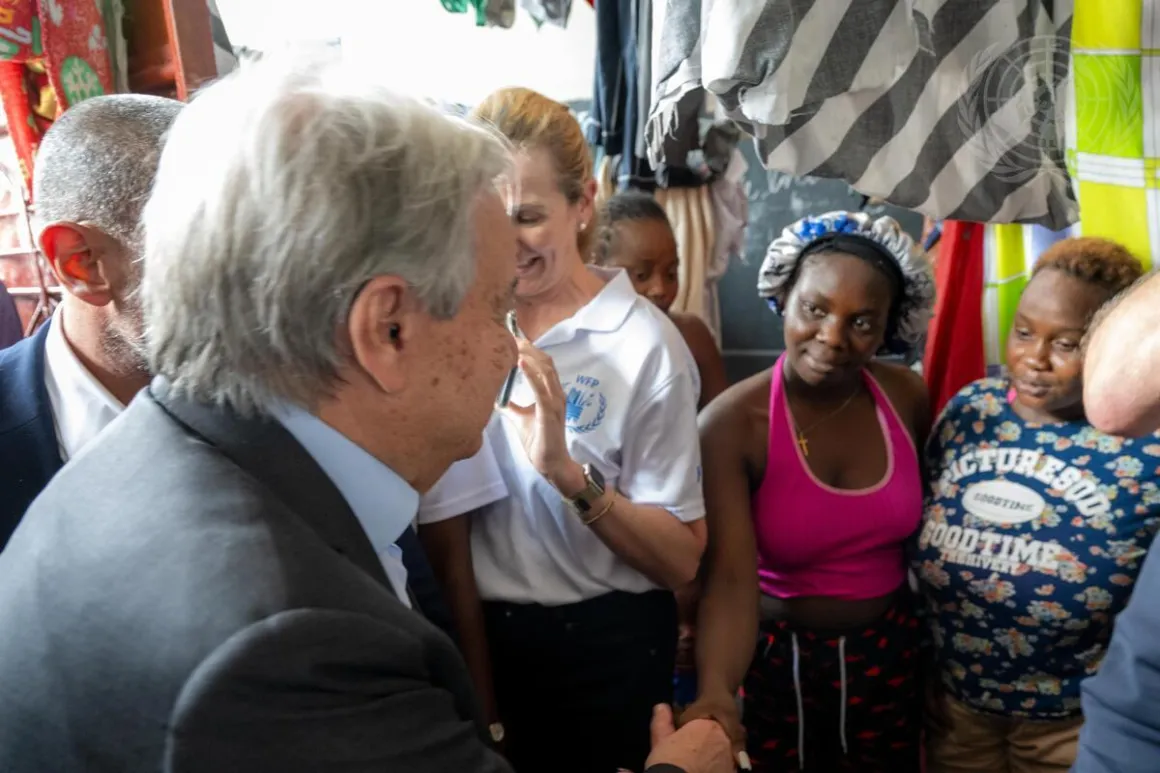
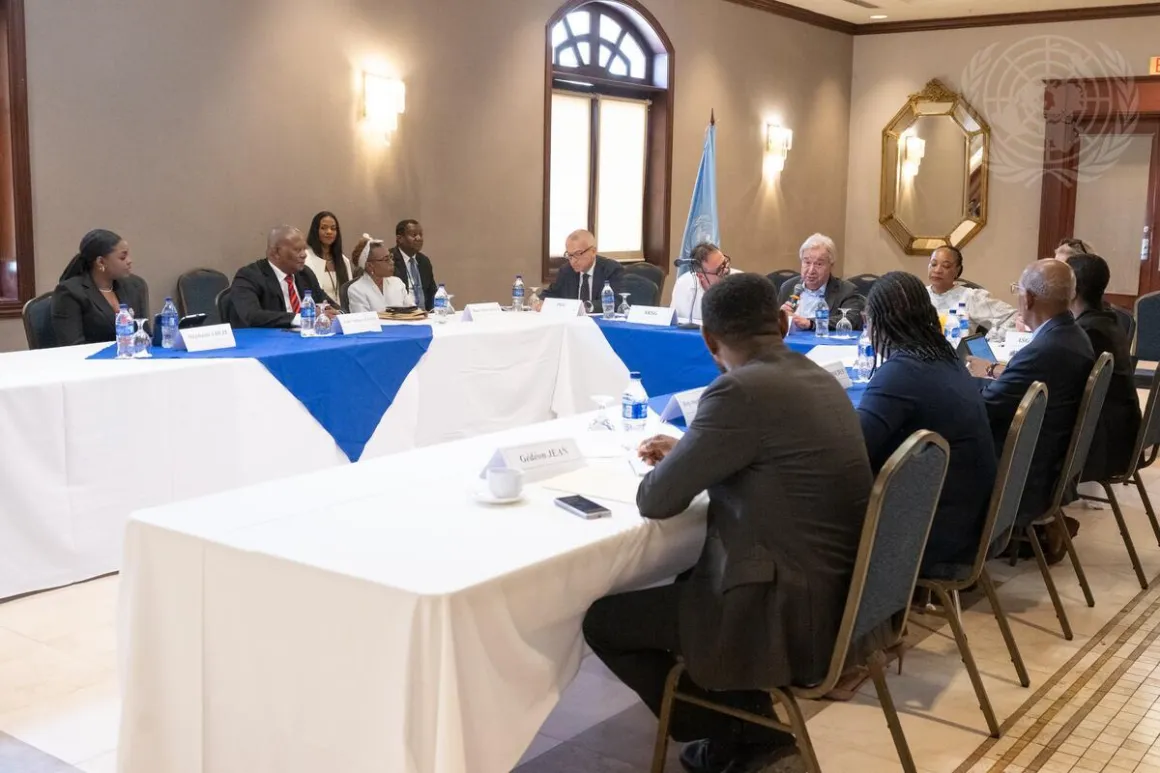
United Nations Secretary-General António Guterres visited Haiti on 16 June 2026 in solidarity with the Haitian people. During his visit, he met Haitian women and men whose lives have been profoundly affected by violence. He witnessed first-hand the humanitarian and security challenges facing the country, as well as the efforts undertaken by the national authorities and the international community to restore stability and support the Haitian people.
The press conference he held at the conclusion of his visit provided an opportunity to assess the support being provided by the United Nations in response to Haiti’s multidimensional crisis, including logistical and operational assistance to the Gang Suppression Force (GSF), in accordance with Security Council resolution 2793.
Humanitarian Crisis
Haiti is facing the most severe humanitarian crisis in the Western Hemisphere — and the one deteriorating most rapidly. Today, 6.4 million people, more than one in every two Haitians, require humanitarian assistance, compared with 5.5 million two years ago. Nearly 1.5 million people have been displaced within the country by violence, while almost 6 million face severe food insecurity. Women and children continue to bear the heaviest burden of this crisis.
Regarding the humanitarian response, the Secretary-General paid tribute to humanitarian personnel and partners — the vast majority of whom are Haitians themselves — who continue their work despite the risks. Last year, they delivered life-saving assistance to nearly 3 million people.
However, the United Nations Humanitarian Response Plan, which requires $880 million to assist 4.2 million people, is funded at only about one quarter of its requirements. António Guterres stressed that “Haiti is not asking for charity. Haiti is asking the world to keep its promises.” He also underscored that Haiti cannot afford to wait.
Sexual Violence and the Recruitment of Children by Gangs
During the first quarter of this year, more than 20 women and girls were subjected to sexual violence every day on average. In the space of one year, child recruitment by gangs has tripled. Today, up to one gang member in two is a child. Childhoods are being stolen by violence, exploitation and hunger.
The Secretary-General strongly condemned the actions of armed groups that thrive by exploiting the most vulnerable. “This is absolutely intolerable. It must stop,” he stated.
Security Situation
According to the Secretary-General, the crisis unfolding in Haiti is fundamentally a security crisis. Since the beginning of the year, gang violence has claimed more than 2,300 lives and left over 1,100 people injured. It is paralysing the State, the economy, education and the delivery of humanitarian assistance.
António Guterres lamented the indifference of a world that has looked away for far too long. He stressed that there is a direct link between the lack of international engagement and the insecurity endured by the Haitian people.
He nevertheless noted some positive developments: “Neighbourhoods in downtown Port-au-Prince have been recovered. The Council of Ministers is once again meeting at the National Palace after more than three years. This is not merely symbolic; it is a sign of the gradual return of State authority,” the Secretary-General emphasized.
The Gang Suppression Force (GSF) and National Forces
The Secretary-General stated that the deployment of the GSF offers a genuine opportunity to push back violence and restore State authority. He recalled that the GSF is not a United Nations operation, but that it benefits from the Organization’s full logistical and operational support through its support office in Haiti.
António Guterres paid tribute to the Haitian police officers and soldiers who continue to hold the line, often at great personal risk. He stressed the importance of providing them with the training, equipment and coordination required to carry out their mission, while fully respecting human rights.
“Human rights and the fight against impunity are not obstacles to security. They are conditions for security and the foundation of public trust,” he said.
According to the Secretary-General, sustaining security gains will require disarming, dismantling and reintegrating gang members under Haitian leadership. It will require a functioning justice system. And it will require stemming the flow of illicit arms that fuels this violence.
He further emphasized that security alone will not be sufficient and must be accompanied by political progress.
“I had frank discussions with Prime Minister Alix Didier Fils-Aimé, as well as with representatives from various sectors of Haitian society. My message was clear: the Haitian people have already waited far too long,” he said.
Political Process
António Guterres called for an acceleration of the political process and the restoration of trust.
“It is for Haitians, and Haitians alone, to determine the path forward. This process must deliver results: inclusive transitional steps and credible elections — the only legitimate path towards the restoration of constitutional order and democratic institutions,” he stated.
United Nations Support and Appeal to the International Community
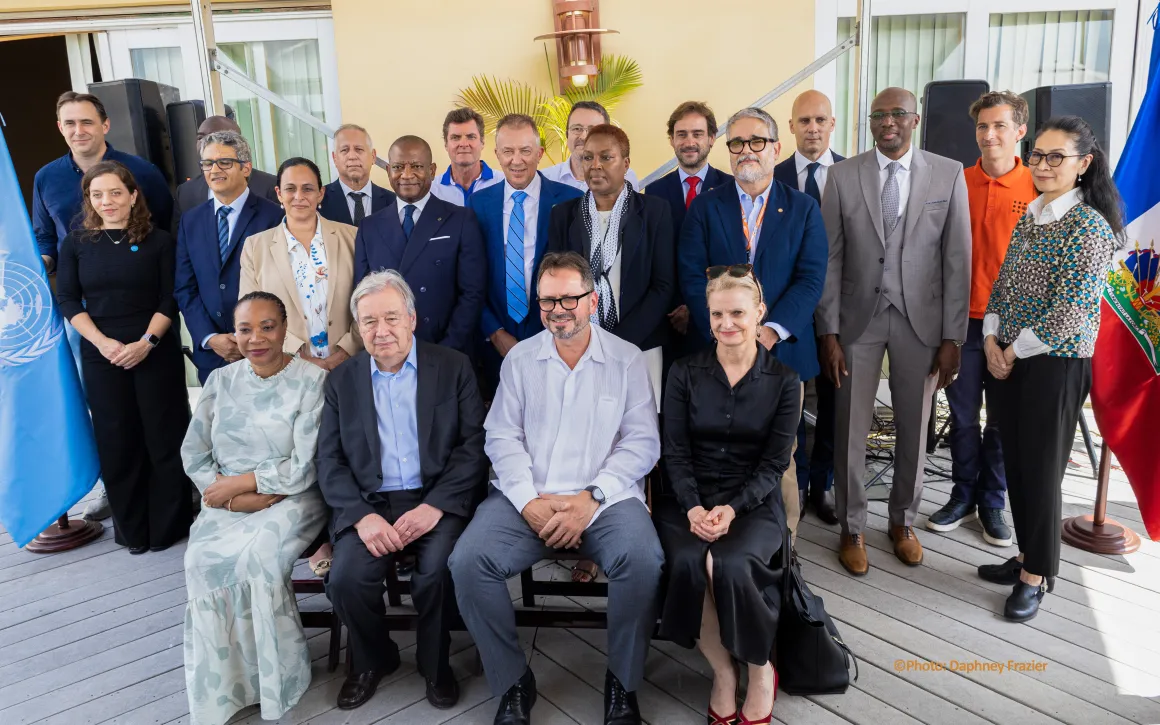
The Secretary-General reaffirmed the full commitment of the United Nations to Haiti.
“Under the leadership of my Special Representative, Mr. Carlos Ruiz Massieu, and through BINUH, we will continue to facilitate dialogue and support Haitian-led solutions,” he said.
He also called on the international community to assume its responsibilities:
“First, strengthen security support through the rapid and full deployment of the Force, while adapting resources to progress achieved on the ground. Second, support the political transition and the country’s recovery through investments in education, health and employment, providing young Haitians with alternatives to gangs and a future of dignity. Third, fund humanitarian assistance in a predictable manner and at the scale required. And above all, listen to the Haitian people,” he concluded.
END


